One
Survey and map moisture
Assess the visible condition and agree any moisture investigation or testing needed to map the work.

North Richland Hills, TX
Commercial flat roof replacement: full tear-off and rebuild for low-slope roofs past repairing, measured and priced in writing.
Flat roof replacement
A commercial flat roof replacement becomes useful when the existing assembly can no longer support a dependable repair or recover. Deteriorated membrane, extensive wet insulation, deck problems and drainage can all change the decision.
Wet insulation needs to be addressed before a new roof goes over it. The area affected matters: localized removal and repair may be possible, while widespread damage can require a larger rebuild.
A recover is a separate option where the existing roof, code and selected system permit it. The estimate should make clear what stays and why it can stay.
Agree how hidden deck and insulation work will be priced and approved when its full extent cannot be determined before opening the roof.
Flat-roof work in full
The stages of a tear-off, each of which should appear on the estimate.
Mapping where the insulation is wet, which sets the work and most of the price.
Removing the failed system down to the deck, containerized and hauled off.
Corroded steel or rotted wood found once the roof is open, priced per unit.
New board to the specified R-value, with a cover board where the system calls for one.
TPO, EPDM, PVC or modified bitumen, mechanically fastened or fully adhered as specified.
Tapered insulation, drains and scuppers, so the new roof sheds water instead of holding it.
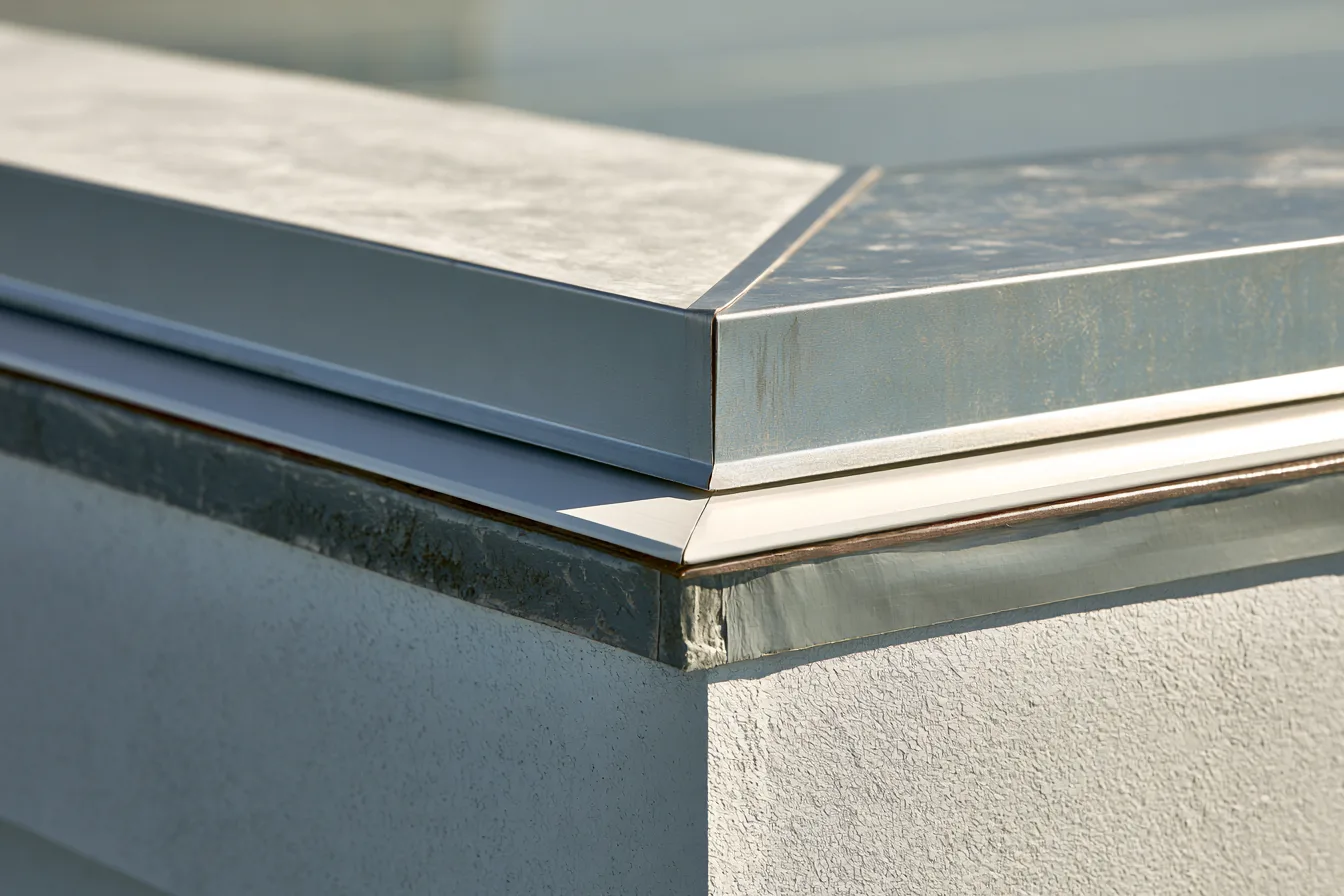
New coping, edge metal and terminations, which is where wind uplift begins.
HVAC curbs, conduit, vents and pipe boots re-flashed into the new system.
Deck condition is only fully knowable once the old roof is off. A named per-unit rate keeps that discovery from becoming a negotiation once the crew is on site.
The roof scope and building access need to be planned together.
One
Assess the visible condition and agree any moisture investigation or testing needed to map the work.
Two
Membrane, insulation R-value, attachment method and drainage strategy, chosen for the building, not the catalog.
Three
Itemized price, unit rates for deck and insulation, and a working schedule that fits your operations.
Four
Plan the opening sequence, temporary protection and weather contingencies around the actual roof area.
Five
Confirm the final checks, required inspections and closeout documents included in the project.
Flat-roof questions
Work, price and disruption.
The extent of membrane deterioration, moisture and deck problems matters. Ask what the investigation shows, whether local removal and repair can leave a sound roof, and what a coating or recover would require. Specialized testing may be a separately agreed part of that investigation.
Sometimes. A recover, usually in TPO, is faster and cheaper, and it is only honest where the existing board is dry and the assembly permits it. Recovering over saturated insulation seals the water in and shortens the life of the new roof considerably.
Some projects can be phased around occupancy, but interior protection, noise, odors and lifting access may require restrictions. Explain the operating needs before the work is priced, so the plan can address them.
The damaged area needs assessment and suitable repair before supporting the new assembly. Agree unit rates and an approval procedure in advance. Structural damage may also need design input and a revised permit scope.
The schedule depends on the roof area, the system and the weather, and any roofer giving you a duration before surveying the roof is guessing. What you can insist on is a schedule in writing once the work is settled.
North Richland Hills Roofers
Tell us the building use, the roof history you know and what has started to fail. Our roofer can inspect it and explain the work needed to compare repair, recover and replacement.
(817) 479-0604